
On The Walking Dead Negan’s coercion of his wives was blatant, and it’s still a problem today. By far the most controversial piece I ever wrote for Undead Walking addressed the illusion of consent within the Sanctuary.
The Walking Dead’s season 7 premiere “The Day Will Come When You Won’t Be,” establishes Negan (Jeffrey Dean Morgan) as a man who governs through terror. Public executions. Ritual humiliation. Absolute control.
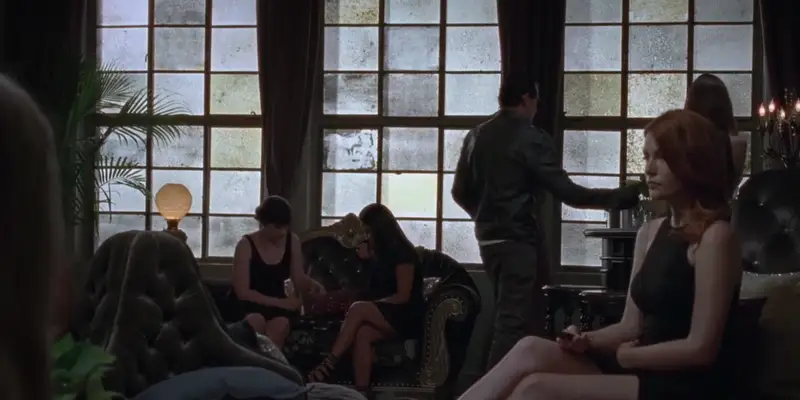
By the time we reach “The Cell” (Season 7, Episode 3), we see how that power operates inside the Sanctuary. And it’s there that the conversation about consent becomes unavoidable.
In The Walking Dead, Negan’s “wives” are not equal partners with agency in a consensual relationship. They’re women living inside a dictatorship where one man controls food, medicine, housing, labor assignments, and life-or-death punishment. To understand why that matters, we have to talk clearly about coercion.
What Coercion Is
Consent requires a choice made of free will. When someone is forced to choose to behave in a certain way because they are threatened or at risk, that’s coercion. Not consent.
Coercion happens when someone uses threats, leverage, or abuse of power to obtain sex, or in Negan’s case, “marriage”. The threat doesn’t have to be a weapon pressed to someone’s head. It can be:
- Withholding life-saving medicine.
- Threatening punishment for a loved one.
- Forcing someone back into dangerous labor.
- Stripping away protection in a violent environment.
If saying no puts you or someone you love at risk, that is not freely given consent. That is coercion. And coercion is a form of sexual assault.
I have fought pitched battles on social media for a decade for saying this often, and loudly. I’ve lost friends and followers over it. But I don’t care.
The facts don’t care about your feelings Negan fanboys and fangirls, and just because you think the actor playing the character is hot doesn’t change the fact that Negan coerced women to be his property in the world he built.
“The Cell” and the Structure of Pressure
“The Cell” gives us one of the clearest examples through Sherry and Dwight.
We learn that Sherry agreed to marry Negan so Dwight wouldn’t be killed. Dwight had stolen insulin and fled. The punishment for that, as we see throughout the Savior system, is brutal. When Dwight is later recaptured, his face is burned with an iron in front of everyone. That is how Negan enforces loyalty.
Sherry’s “choice” happened inside that threat:
Marry Negan, and Dwight lives.
Refuse, and Dwight likely dies.
That is not romance. That is survival under duress.
In “Service” (Season 7, Episode 4), we see more of the wives inside the Sanctuary’s hierarchy. They live in relative comfort compared to workers. They have privileges. But those privileges are conditional. Everything in Negan’s world is conditional.
The women understand the rules. We see Amber terrified when she wants to leave Negan and return to Mark. Instead of simply allowing her to go, Negan stages a public spectacle in “The Cell” where Mark’s face is ironed as punishment for “cheating.” Amber is forced to watch.
Negan says he doesn’t allow rape. He frames his system as consensual. But when a woman tries to leave him, the man she loves is mutilated in front of her.
That isn’t consent. That’s intimidation designed to ensure compliance.
“Hostiles and Calamities” and the Illusion of Choice
In “Hostiles and Calamities” (Season 7, Episode 11), we see more cracks in the system. The wives plot to poison Negan with Eugene’s help. That alone tells us something. Women in loving, consensual relationships don’t usually risk execution to escape their husband.
They’re desperate. They are willing to risk death because the alternative is continuing to live as possessions in Negan’s court. Some of the women may have chosen to accept his demand because they saw it a better alternative to a tough life of survival. But they were incapable of giving true consent because of the system that the Sanctuary was built on.
When one person controls:
- Your safety from walkers
- Your access to shelter
- Your access to food and water
- Your protection from violent men
- Your medical access
- Your loved one’s fate
You are not operating from a place of free choice.
From a psychological standpoint, Negan controlled the women’s access to four of the five basic needs of survival outlined in Maslow’s hierarchy of needs. They were not free to say no, because saying no meant giving up access to basic survival needs for them or people they loved.
Negan’s Rules Prove the Point
Negan repeatedly insists he doesn’t tolerate rape. He kills one of his own men for attempting to assault Sasha in “East” (Season 6). He uses that as evidence that he has a moral code.
But, Negan’s version of consent is surface-level. He equates “she agreed” with ethical behavior. What he ignores is the context in which that agreement happens.
When Amber wants to leave, someone else is maimed. When Sherry wants Dwight alive, she marries Negan so that he will “only” burn Dwight’s face.
Negan doesn’t need to physically drag someone into his bed. The threat of what happens if they refuse does the work for him.
Why This Conversation Is Still Uncomfortable
As I found out on social media, there are a lot of men who aren’t ready for the conversation about coercion. Many men push back against labeling coercion as sexual assault because it calls their own beliefs about consent into question. If coercion isn’t consent, they have to face some uncomfortable truths.
Coercion doesn’t have to be threatening someone’s life. It’s also:
- Pressuring someone repeatedly after they say no.
- Threatening to withdraw financial support.
- Leveraging workplace authority.
- Implying consequences for refusal.
Admitting that coercion is assault forces people to reconsider dynamics they’ve seen, participated in, or benefited from. That’s uncomfortable.
So instead, some argue that if a woman technically said yes, it must have been consensual. But “yes” under threat is not the same as “yes” given freely.
Fiction Reflecting Real Power
The Walking Dead uses an apocalyptic setting to exaggerate human power structures. The Sanctuary is a dictatorship. Negan’s marriages are extensions of that dictatorship. Those “marriages” reinforce his dominance. They reward loyalty. They punish resistance.
Recognizing coercion in fiction shouldn’t be controversial. It should sharpen our understanding of how power distorts consent in real life.
Negan’s wives were not operating from a position where they could safely say no without risking their lives or the lives of people they loved. People who are uncomfortable with that need to do some self-reflection to understand why that makes them so upset.